
Dismissive Attached
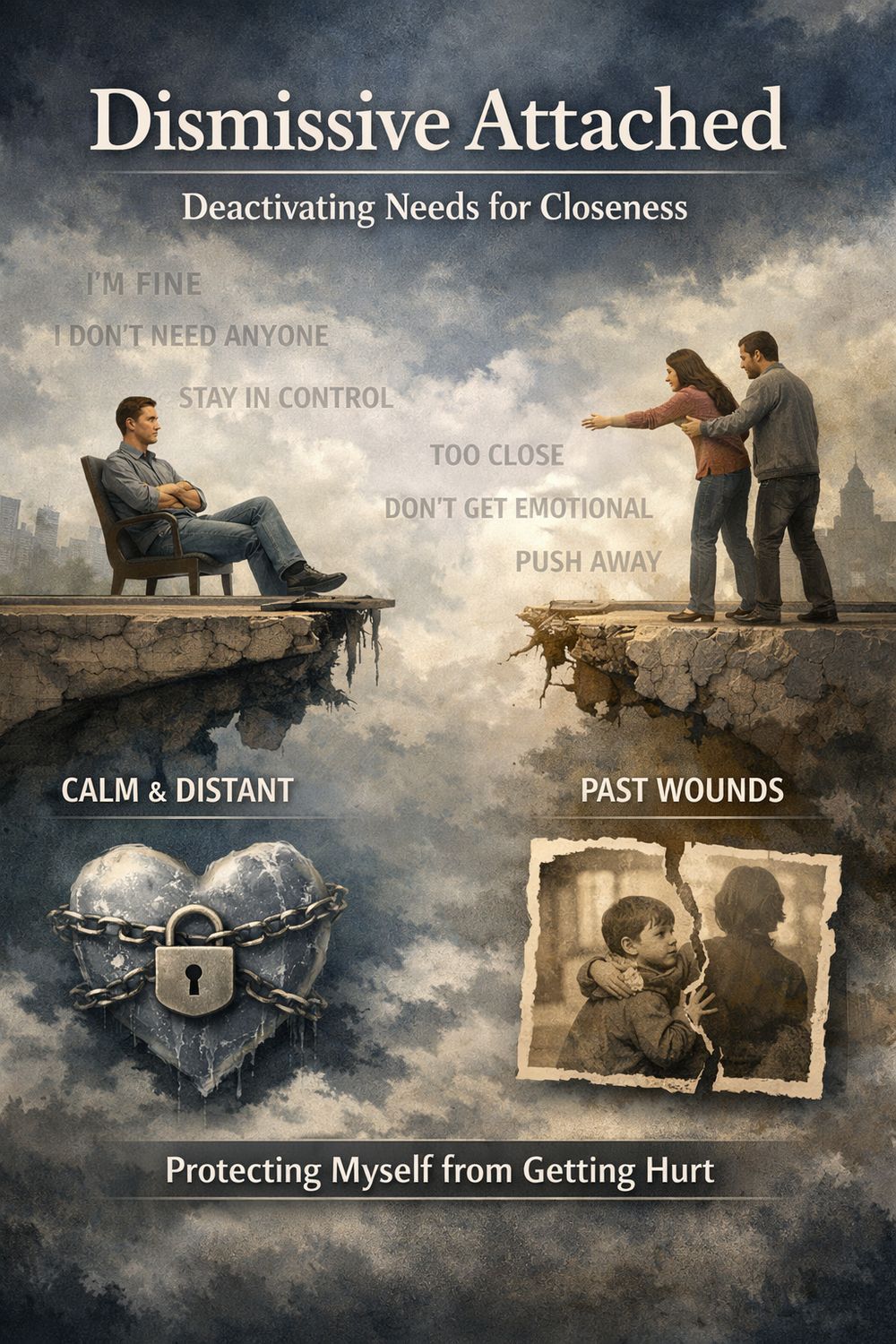
Dismissive attached is an adult attachment pattern organized around maintaining autonomy and minimizing reliance on others when stress rises. When closeness, need, or emotional intensity shows up, the system often defaults to one central move: downshift attachment needs to stay in control. Outwardly, this can look calm, self-contained, and rational. Internally, it is often a protective strategy shaped by early experiences where turning toward someone did not reliably bring comfort, or brought criticism, rejection, or emotional misattunement.
In the research tradition that defined adult attachment classifications using the Adult Attachment Interview (AAI), dismissive attachment is reflected in a “dismissing” state of mind: people tend to devalue attachment, idealize caregivers without supporting memories, downplay distress, or struggle to recall specific attachment-relevant events. This approach was developed and operationalized in the AAI work of Mary Main, Carol George, and Nancy Kaplan, who built the interview and classification system used to identify patterns like dismissing states of mind in adults, linking them back to developmental attachment processes.
Dismissive attachment is not defined by a single moment of distancing. It is defined by a reliable pattern of deactivating attachment needs as the primary method of emotional regulation. When stress rises, the system protects itself by reducing vulnerability, limiting emotional exposure, and increasing self reliance.
How dismissive attachment affects the nervous system
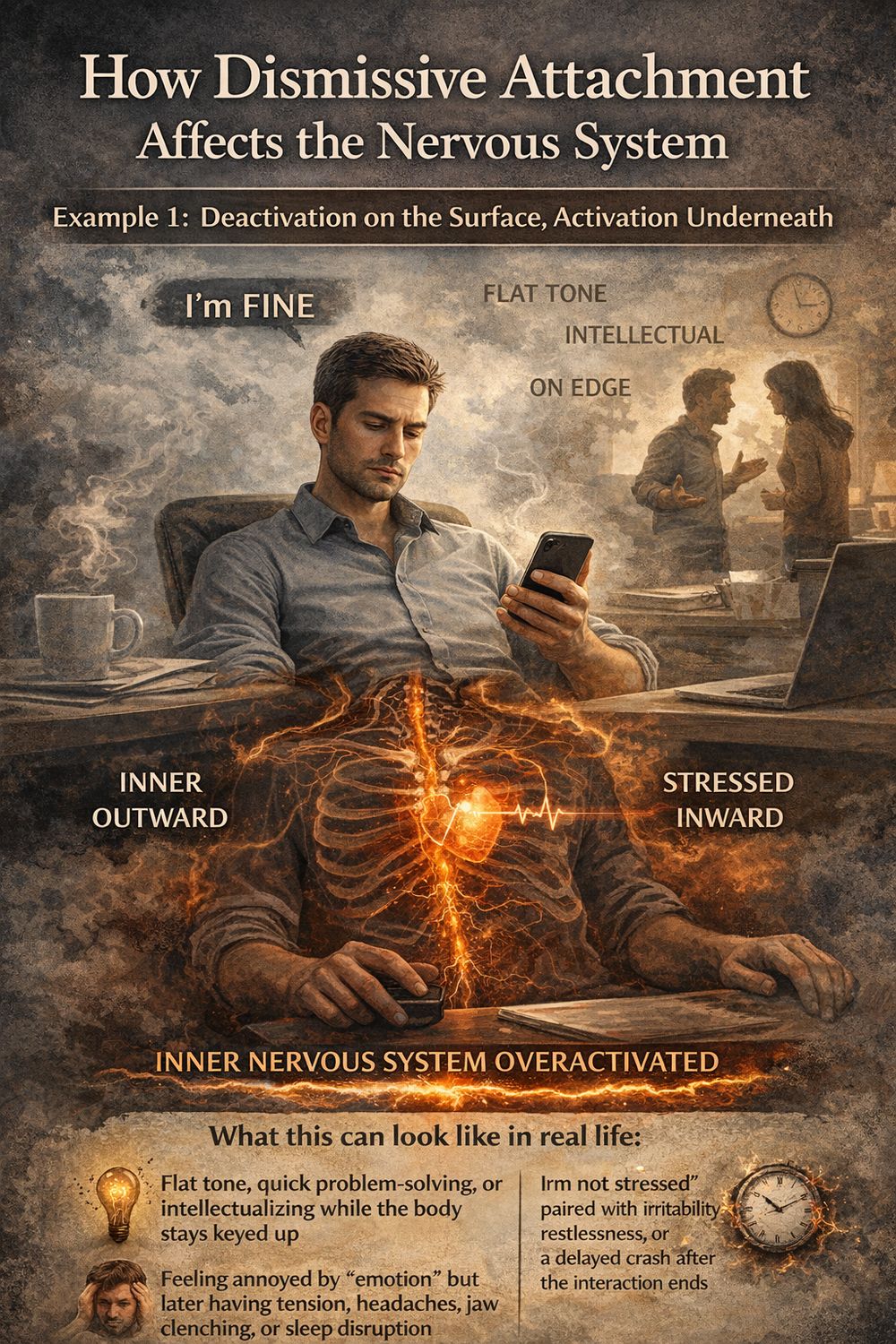
Example 1: Deactivation on the surface, activation underneath
A common nervous-system pattern in dismissive attachment is a split between what is reported and what the body is doing. Someone may feel “fine,” “unbothered,” or “over it,” while their physiology shows stress activation. In conflict or emotional demand, avoidant or dismissive tendencies have been linked to heightened stress reactivity (including cardiovascular and endocrine markers) even when subjective distress is minimized. This is one reason dismissive attachment can look regulated while the body quietly carries the load.
What this can look like in real life:
- Flat tone, quick problem-solving, or intellectualizing while the body stays keyed up
- Feeling annoyed by “emotion” but later having tension, headaches, jaw clenching, or sleep disruption
- “I’m not stressed” paired with irritability, restlessness, or a delayed crash after the interaction ends
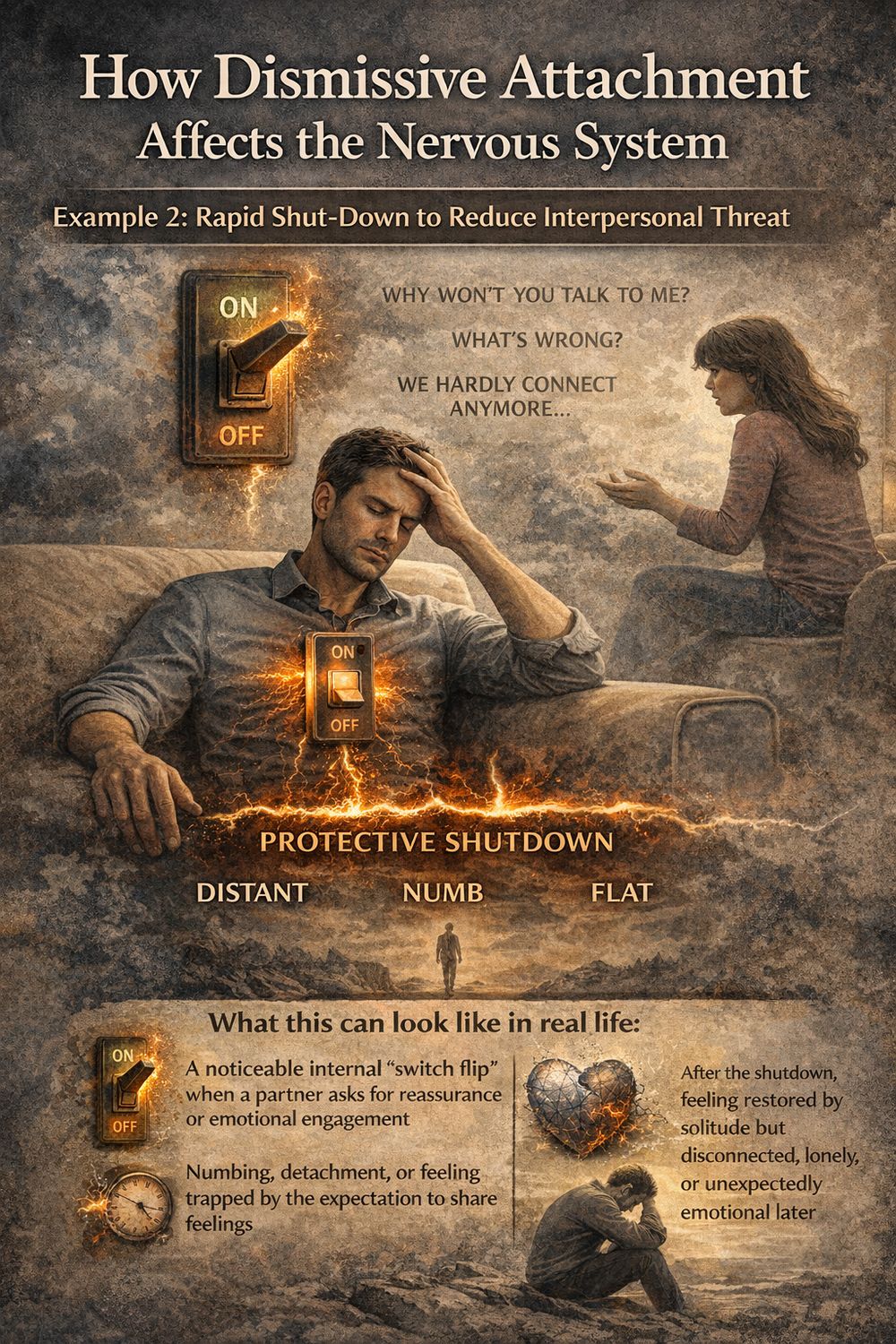
Example 2: Rapid shut-down to reduce interpersonal threat
When closeness feels like pressure, the nervous system may move quickly into protective distancing: withdrawing, going quiet, changing the subject, or leaving the conversation. Functionally, this reduces immediate interpersonal demand, which can bring short-term relief. Over time, though, repeated shut-down can reduce flexibility: the system learns that the safest route is less contact, less feeling, less need. Research linking attachment insecurity to stress physiology supports the idea that insecure patterns are associated with altered stress-response processes under relational strain.
What this can look like in real life:
- A noticeable internal “switch flip” when a partner asks for reassurance or emotional engagement
- Numbing, detachment, or feeling trapped by the expectation to share feelings
- After the shutdown, feeling restored by solitude but disconnected, lonely, or unexpectedly emotional later
Common relational experience
Dismissive attached individuals often value loyalty and stability, but they tend to experience closeness as safest when it stays low-demand and low-intensity. They may be deeply committed while still struggling with bids for reassurance, repeated emotional processing, or anything that feels like dependency. The growth edge is not “be more emotional.” It is building nervous-system capacity for connection under stress, so closeness stops registering as a threat and starts registering as support.