from survival to responsibility
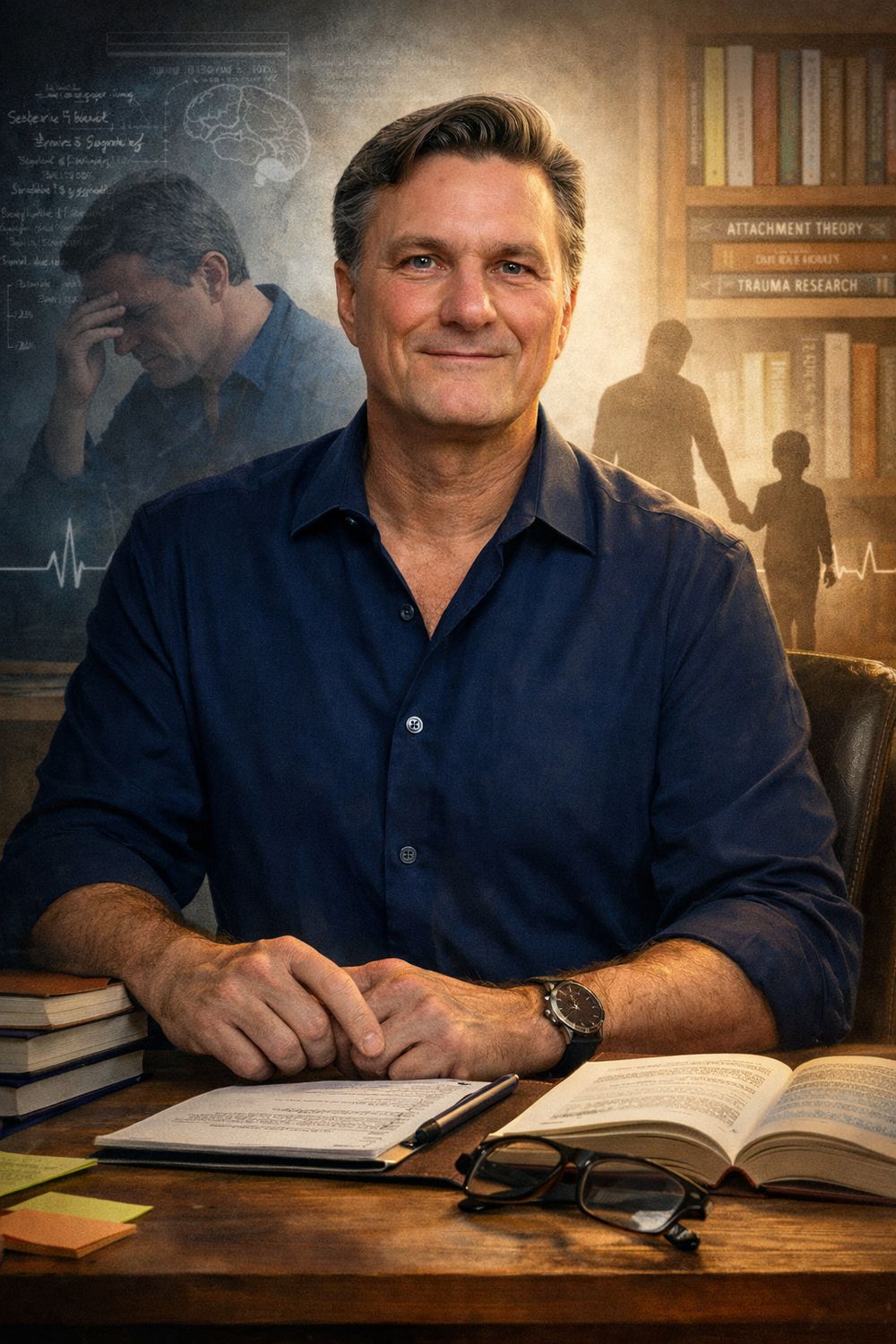
For decades I lived as an unaware Fearful-Avoidant adult. I was not healing. I was surviving. And in the process, I hurt the people closest to me.
What changed was not insight or theory. It was the weight of recognizing the impact of my behavior. I reached a point where repeating the same patterns was no longer something I could live with. I made one decision that became non-negotiable: I would not continue causing harm.
At the time, I did not know the language of attachment. I had never heard terms like Dismissive, Ambivalent, or Fearful-Avoidant. I only knew that something inside me had to shift. So I began the daily work of facing my reactions, regulating my nervous system, and interrupting patterns that had once felt automatic.
Later, I discovered attachment research. It gave structure and language to what I had already lived through. The foundational work of John Bowlby and Mary Ainsworth clarified how early attachment patterns form. Mary Main and Alan Sroufe deepened the understanding of how those patterns carry into adulthood. Peter Fonagy’s work on mentalization expanded the lens of relational awareness. The trauma research of Bessel van der Kolk and Pat Ogden helped bridge attachment theory with nervous system regulation and embodied repair.
What I had experienced personally was now grounded in decades of developmental and trauma research.
Today, my coaching integrates lived experience with research-informed methods. I created the Trait Identification Model, a framework that organizes 30 of the most commonly observed insecure attachment traits across four decades of adult attachment research. This model helps people clearly identify their patterns and apply targeted tools that create measurable and lasting change.
My work focuses on:
• Emotional dysregulation and nervous system skills
• Boundaries and recurring conflict cycles
• Insecure attachment traits including Ambivalent, Dismissive, and Fearful-Avoidant
• Practical movement toward Earned Secure functioning
Here is what I know: no one can choose this work for you. Information alone does not create change. Change begins with decision. When the cost of staying the same becomes greater than the cost of facing yourself, real growth becomes possible.