Anxious Attached
Anxious attachment is a pattern of nervous system regulation that forms in early relationships and continues to shape how people relate to connection, proximity, and emotional safety throughout life. It is not a judgment on character or worth. Instead it describes how the nervous system gets organized around a core survival task: detecting and reducing perceived threats to connection.
In anxious attachment, the nervous system tends to prioritize closeness and responsiveness because past experience showed that connection was unpredictable or inconsistent. People with anxious attachment typically have a strong vigilance to social cues, a heightened sensitivity to perceived distance or disconnection, and a drive to seek reassurance or coordinate closeness when they feel uncertain.
It is important to recognize that anxious attachment patterns can show up in people across all adult attachment classifications. Secure adults can have anxious moments. Dismissive adults can have pockets of anxiety around specific connections. Fearful-Avoidant adults can oscillate between needing closeness and fearing it. What defines the anxious attachment pattern is not the label alone but how the nervous system responds to perceived disconnection or threat in relationships.
Two major researchers who helped define how attachment behaviors and patterns show up in both children and adults — including the patterns associated with anxiety about connection — are Mary Main and Erik Hesse. Their work on the Adult Attachment Interview laid foundational groundwork for understanding how states of mind about attachment influence emotional and interpersonal regulation in adulthood. Another key contributor is Philip R. Shaver, who, with colleagues, extended attachment theory to adult romantic relationships and described how anxiety about closeness and abandonment can be measured and observed in adult patterns of thinking and behavior.

How Anxious Attachment Shows Up in the Nervous System
Because attachment is fundamentally about regulation, anxious attachment has distinct effects on the nervous system. Here are two clear ways that pattern plays out:
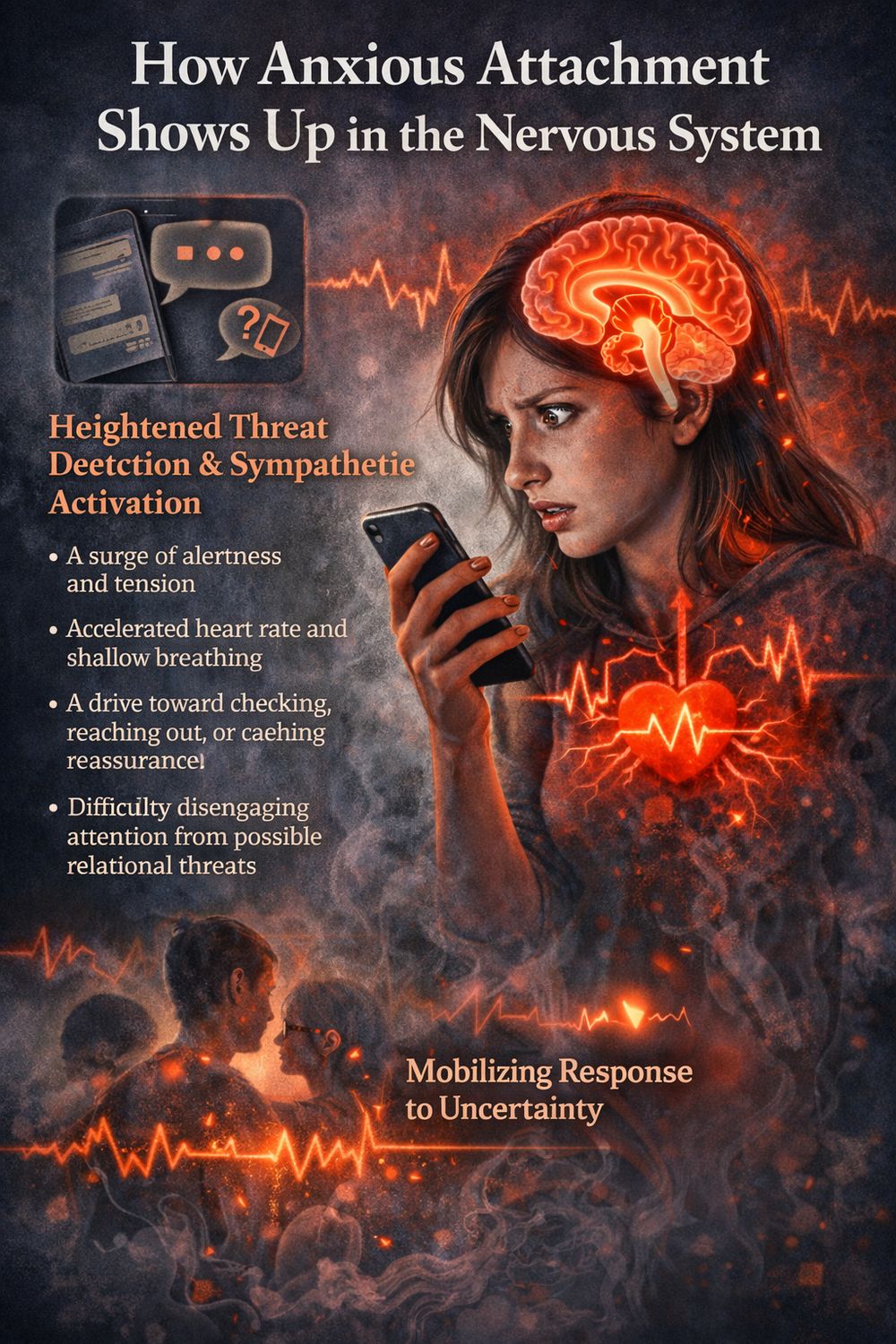
Example 1: Heightened Threat Detection and Sympathetic Activation
When cues of distance or uncertainty appear — such as a delayed response, ambiguous tone, or lack of clarity — the nervous system may shift into a protective threat mode. This activates the sympathetic nervous system, producing:
- A surge of alertness and tension
- Accelerated heart rate and shallow breathing
- A drive toward checking, reaching out, or seeking reassurance
- Difficulty disengaging attention from possible relational threats
This response reflects the brain’s early learning that ambiguity in connection can signal danger, not safety, prompting a mobilizing strategy aimed at restoring connection.
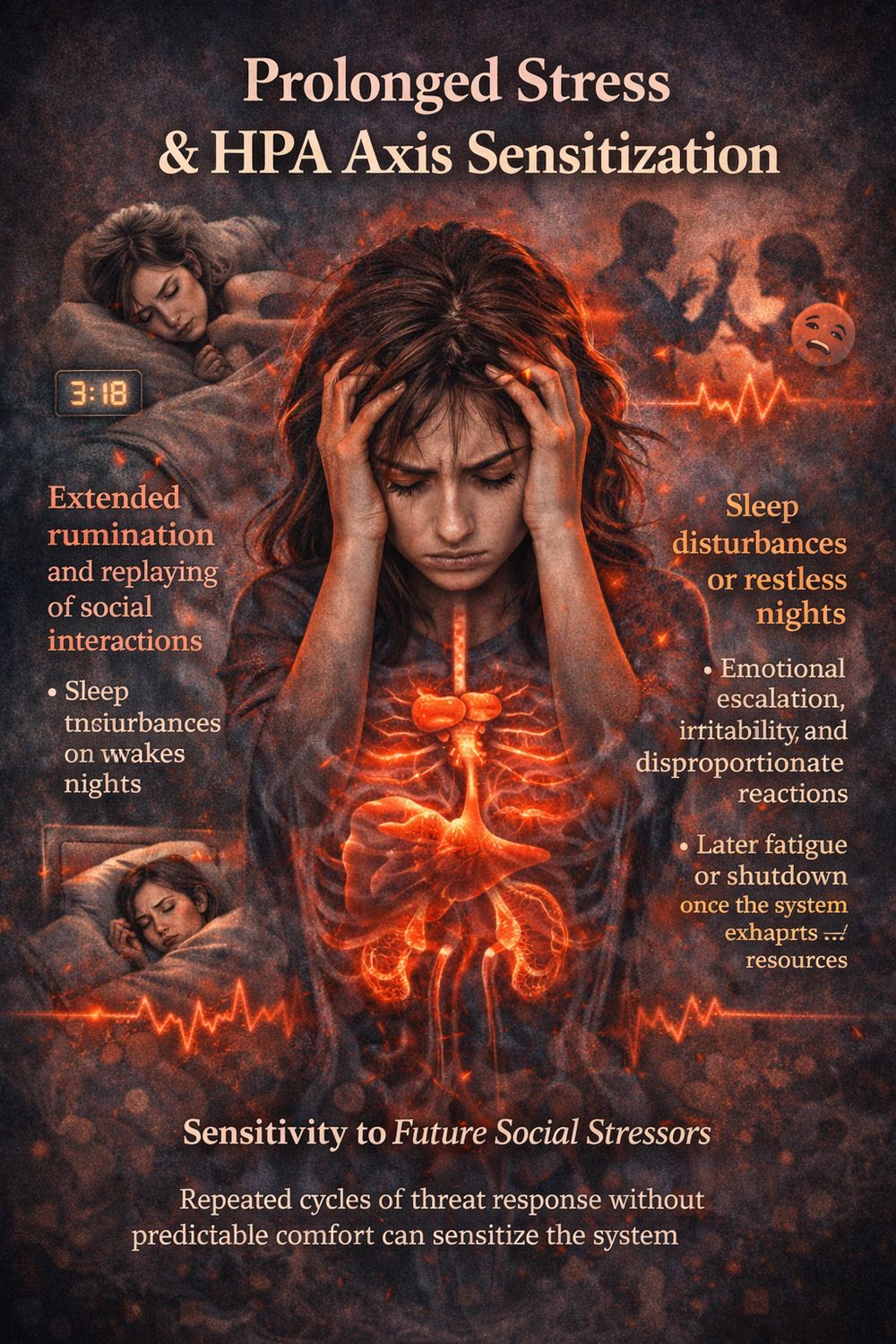
Example 2: Prolonged Stress and HPA Axis Sensitization
When connection remains uncertain or inconsistent, the body’s stress response can stay chronically engaged, involving the hypothalamic-pituitary-adrenal (HPA) axis. Instead of returning to baseline after a minor stressor, a sensitized system may stay activated longer, leading to:
- Extended rumination and replaying of social interactions
- Sleep disturbances or restless nights
- Emotional escalation, irritability, or disproportionate reactions
- Later fatigue or shutdown once the system exhausts resources
Later fatigue or shutdown once the system exhausts resources
Anxious attachment is not about being “too emotional” or “clinging.” It is a biologically grounded survival strategy rooted in past attachment experiences. It shapes how people attend to, interpret, and respond to social cues. Understanding these patterns gives clarity to long-standing relational patterns and opens a pathway to shift how the nervous system organizes around safety, trust, and closeness.